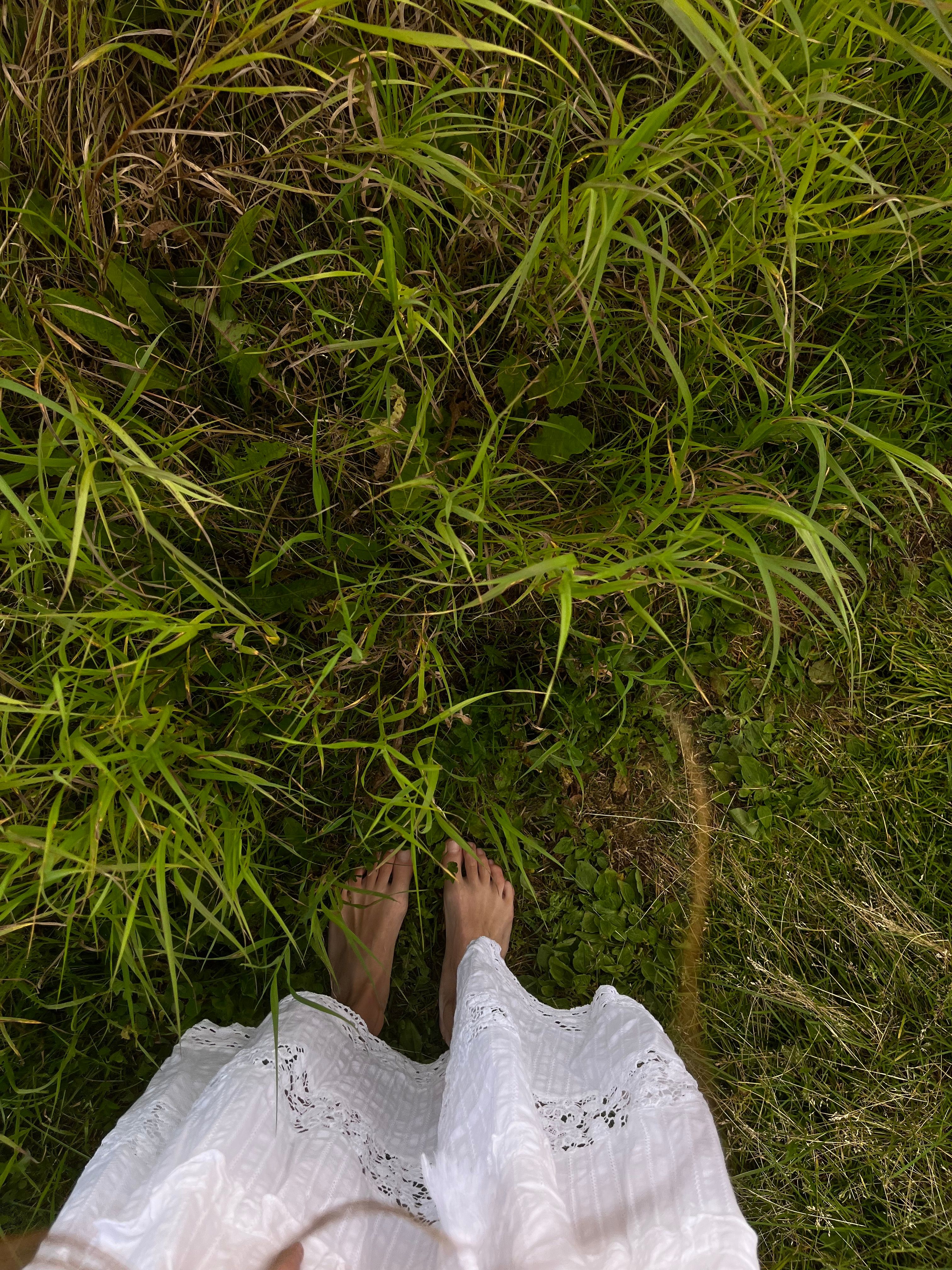
Nature may be one of the most important relationships you'll have.
I grew up in the Caribbean, where nature wasn’t somewhere you escaped to on weekends. It was woven into everyday life.
My happiest memories have bare feet, long afternoons, trees to climb, the ocean touching my skin and the feeling of cool grass after the rain.
Nature was my first love.
I left my Caribbean homeland as a teenager and returned 30 years later to discover everything had changed.
Except the trees.
The same tree I had fallen out of was still there.
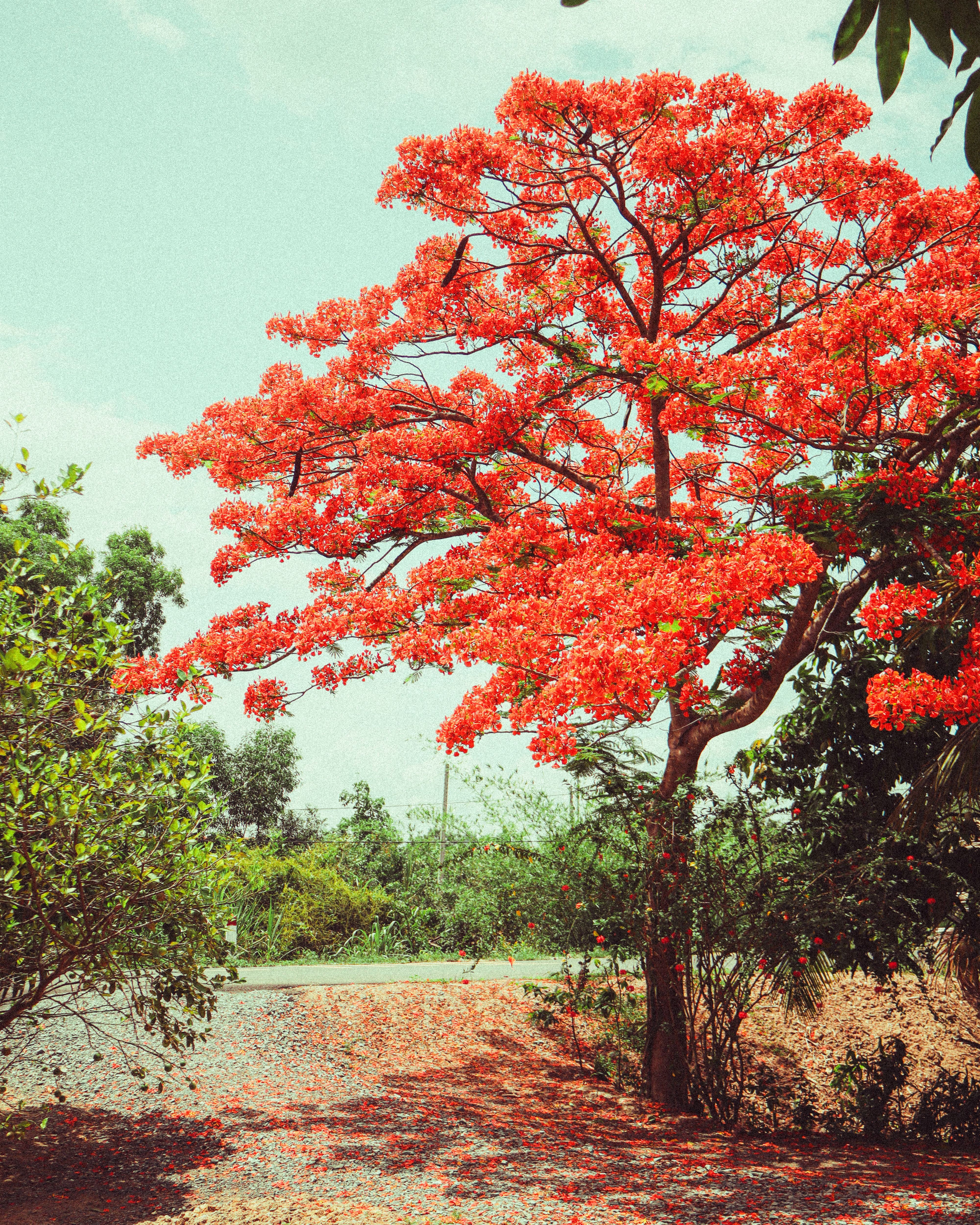
The one that was always washed in bright red flowers was still there.
The one that became my castle was still there.
And the one that shaded so many long, hot Caribbean afternoons was still there.
Seeing them again felt like coming home.
We often think of nature as somewhere we go to escape.
But I believe it offers us something far greater.
It offers us a relationship.
One that asks nothing of us except that we arrive.
Nature doesn’t ask us to explain what we’re carrying.
It simply meets us where we are.
It witnesses our joy, our grief, our exhaustion, and our wonder.
It reminds us that nothing we carry is too much to bring there.
Perhaps that's why so many of us instinctively turn to nature when life feels overwhelming.
It offers refuge.
It anchors us in the present.
No matter how much life changes, there is still a place where we can return.
Nature is a relationship that has been waiting for us all along.
Here are six simple invitations to return to that relationship.
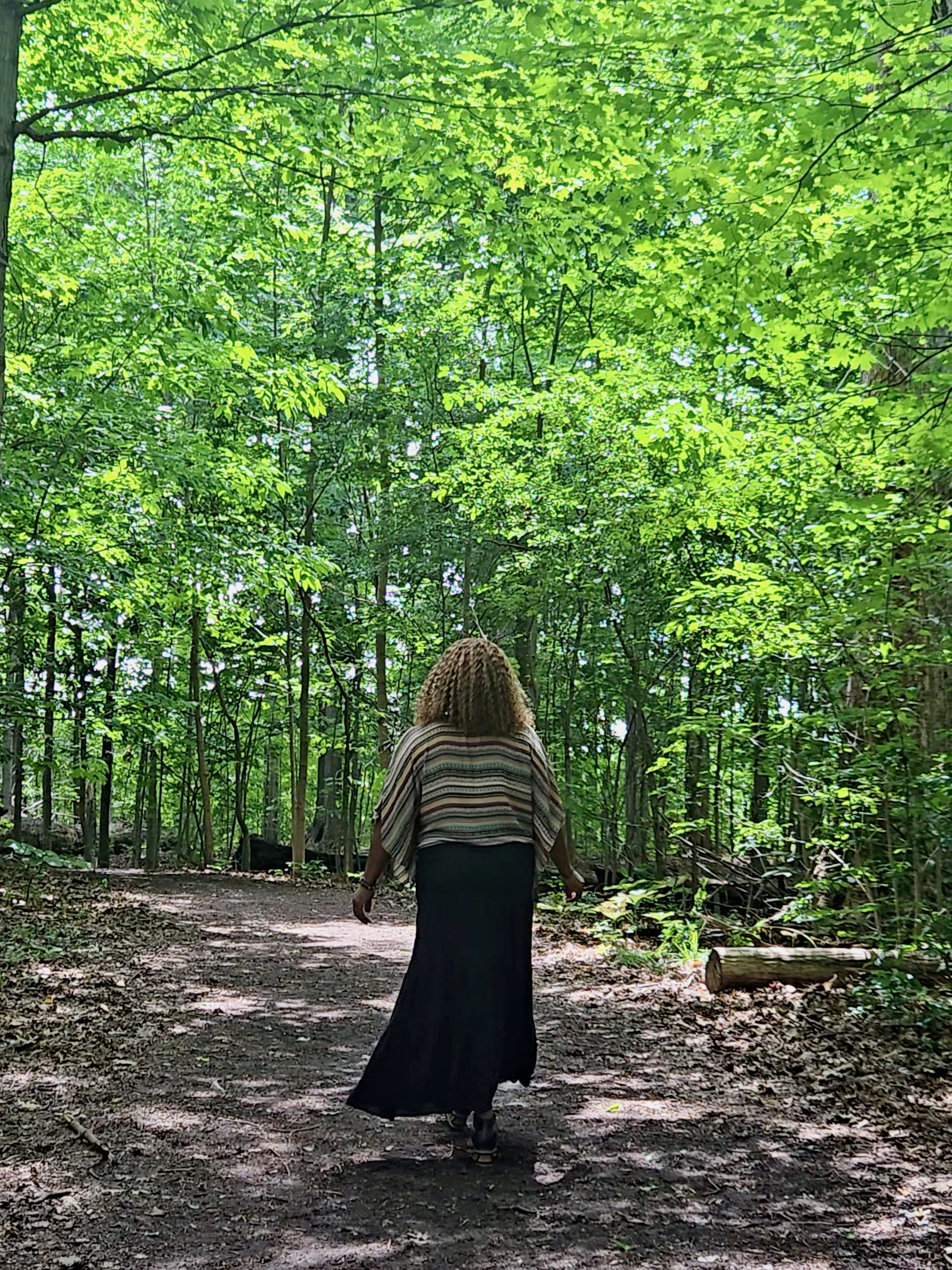
1. Walk Without a Destination
Leave your phone in your pocket and slow your pace.
Instead of focusing on where you’re going, simply notice what draws your attention. The calls of birds. Sunlight filtering through the trees. The scent of the earth after rain. The texture of bark beneath your fingertips.
Why it matters: Slowing down helps your nervous system shift out of constant doing and into presence.
2. Take a Sensory Bath
Find a place where you can sit or stand comfortably.
If it feels comfortable, gently close your eyes for a minute or two.
Begin by listening.
Notice the sounds around you. Wind moving through the leaves. The calls of birds. Rustling branches. Water nearby. Even the quiet between the sounds.
Then bring your attention to scent.
What do you notice?
Damp earth after rain. Pine. Wildflowers. Fresh air.
When you’re ready, open your eyes and slowly take in the colours, the light filtering through the trees, and the movement of leaves, grasses, or clouds.
Notice what became more vivid simply because you gave it your attention.
Why it matters: When your senses become fully engaged, your mind has less room for mental chatter, and your body naturally begins to arrive in the present moment.
3. Let the Trees Hold You
Trees have a remarkable way of helping us feel supported, grounded, and steady. Try one—or both—of these practices.
Receive Support
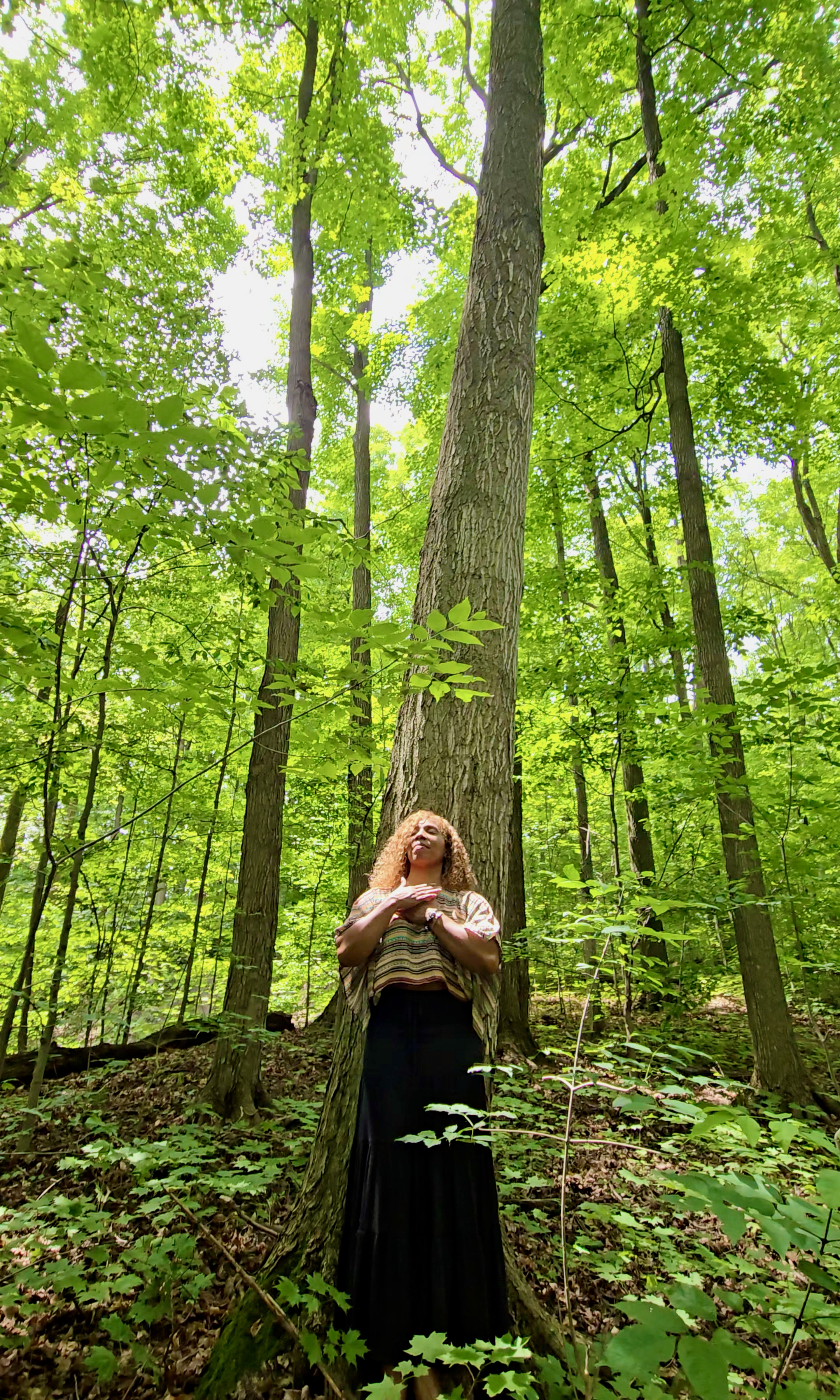
Sit or stand with your back resting against the trunk.
Allow yourself to feel its steadiness behind you.
Stay for a few minutes and simply receive.
Cultivate Connection
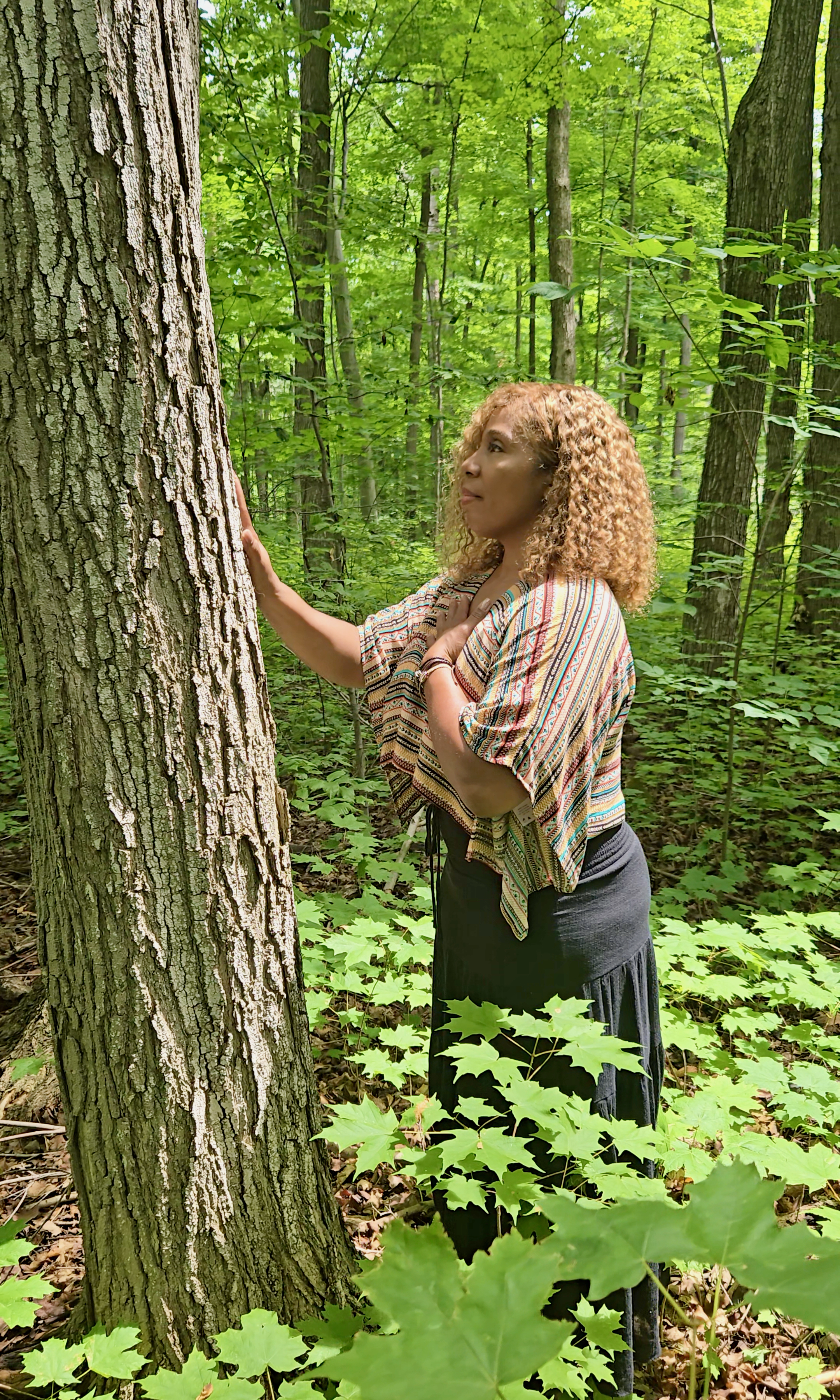
Stand facing the tree.
Place one hand on the bark and the other over your heart.
Close your eyes, or soften your gaze.
Notice the warmth of your hand and the texture of the bark.
Stay for a few moments, simply sharing the space.
Why it matters: Touch, stillness, and steady support are powerful cues of safety for the nervous system, helping us feel more grounded and connected.
4. Feel the Earth Beneath You
If you can, take off your shoes and stand barefoot on grass, sand, or soil.
Feel the ground beneath your feet.
Notice its texture and temperature.
Stay for a few minutes—or longer if it feels nourishing.
Why it matters: The earth is not just beneath you—it is in relationship with you.
Even a few minutes of bare contact has been shown to reduce stress and help bring the body back into balance.
5. Take It Outside
Take your journal, a grounding meditation, or a breathwork practice into the forest, beside water, or somewhere that allows you to feel immersed in nature.
Allow the trees, the breeze, the sounds around you, or the water beside you to become part of your practice.
You may find that what feels difficult within four walls becomes more spacious beneath an open sky.
If you can, return to the same place again and again—a favourite bench, a particular tree, or a space in the forest that feels welcoming.
With each visit, that place becomes more familiar, and so does the feeling it awakens in you.
Why it matters: Nature becomes a steady partner in your practice, helping your body settle while creating space for reflection, clarity, and connection.
6. Pause in Gratitude
Take one last moment before you leave.
Place your hand on a tree, touch the earth beneath your feet, or simply stand still for a moment.
Take one slow breath and allow a deep sense of appreciation to wash over you. Let yourself fully receive the beauty, the steadiness, and the presence that has surrounded you.
Why it matters: Just as the final rest at the end of a yoga practice allows your body to absorb the benefits of the practice, this pause gives your nervous system time to take in what you’ve experienced.
Appreciation helps a sense of calm, steadiness, and connection settle—so you can carry it with you long after you leave.
Stay Connected
Subscribe to my lovenote to receive reflections, practices, and tools that help you release what doesn’t serve you and reclaim the pleasure that is yours.